
Check Engine Light On? Don't Panic. Here's What It Means
It is your dashboard's favourite way to ruin an otherwise normal journey. The good news is that an engine warning light does not automatically mean the engine is finished. Its appearance and the way the car feels tell you how urgently to react.
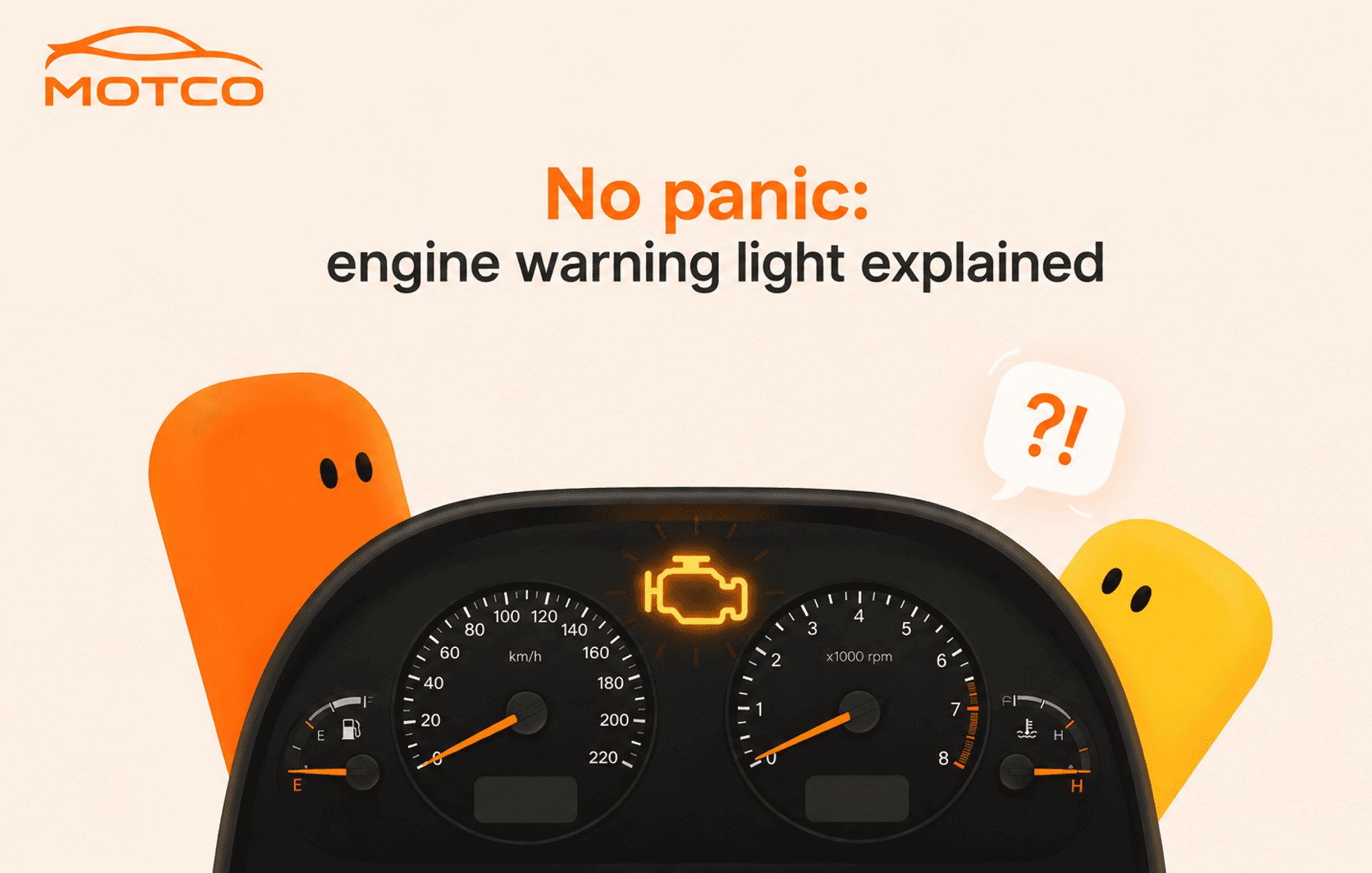
The short answer: steady, flashing or red?
First, keep control of the car and look for a safe place to slow down. Do not stare at the dashboard while moving. Once safe, note the colour, whether the light is steady or flashing, and whether the engine is vibrating, losing power, smoking or overheating.
Steady yellow or amber
The car has detected a fault. If it still drives normally and no red warning is showing, drive gently and arrange a diagnostic check without delay. Avoid hard acceleration, high revs and long journeys until it has been inspected.
Flashing yellow or amber
Treat this as urgent. It often accompanies an active misfire that can damage the catalytic converter. Ease off the accelerator, reduce speed and stop safely if the flashing continues, the car shakes or power drops. Arrange roadside assistance or immediate diagnosis.
Red warning
Stop as soon as it is safe, switch off the engine and check the owner's manual. Red oil pressure, coolant temperature or central engine warnings can signal a condition that may cause severe damage. Do not continue unless the manufacturer's instructions say it is safe.
What should you do in the first minute?
Stay calm and pay attention to how the car feels. Shaking, unusual noises, smoke, a burning smell, overheating or sudden loss of power all make the warning more urgent. Check whether any red oil-pressure or temperature warning is showing too; if it is, pull over safely and switch off the engine.
If the car feels normal and only a steady amber engine light is showing, drive gently and avoid hard acceleration, high revs, towing or unnecessary motorway driving. Arrange a workshop or roadside diagnostic scan soon, and do not simply clear the light and assume the fault is fixed.
What usually causes a check engine light?
The engine management system monitors combustion, emissions and dozens of electrical signals. A warning can therefore come from a minor leak, a failed sensor or a mechanical problem. Common causes include:
Oxygen or lambda sensor
A bad reading can upset the air-fuel mixture, increase fuel use and raise emissions.
Mass air-flow or intake sensor
Incorrect air measurement can cause hesitation, poor throttle response or rough running.
Spark plugs or ignition coils
Worn or failed ignition parts can create a misfire, vibration and a flashing warning lamp.
Fuel injectors
Blocked, leaking or electrically faulty injectors can cause inefficient or uneven combustion.
EGR or emissions-control system
EGR faults are common on diesels and may cause poor performance, smoke or higher emissions.
Fuel cap or vapour-control leak
On cars that monitor the fuel-vapour system, a loose cap or leaking hose can trigger the lamp.
Catalytic converter or particulate filter
Restricted or inefficient emissions equipment can trigger faults and reduce performance.
Wiring, battery or connector fault
Low voltage, corrosion or damaged wiring can produce intermittent sensor and control-module errors.
Why the light cannot tell you the exact repair
When the car detects a problem, it stores a diagnostic trouble code. A scanner can read that code, but it normally identifies the affected system or an abnormal reading. It does not guarantee that a particular part has failed.
For example, an oxygen-sensor code might be caused by the sensor itself, damaged wiring, an intake leak, an exhaust leak or another fault affecting the fuel mixture. Replacing the first component named by a cheap code reader can waste money. A proper diagnosis may include live-data analysis, wiring tests, smoke testing and mechanical checks.
Deleting a warning without repairing its cause removes useful diagnostic evidence and may reset emissions readiness monitors. If the fault remains, the light will return.
Will the engine warning light fail an MOT?
It can. Under the current DVSA inspection manual, an engine malfunction indicator lamp that is inoperative or indicating a malfunction is a major defect on vehicles where that lamp is included in the test.
During the check, the lamp should illuminate when the ignition is switched on and then go out after the engine starts, although the exact sequence varies by vehicle. Removing the bulb, covering the symbol or clearing the code immediately before the test is not a repair.
You can review a car's previous failures and emissions-related advisories with MOTCO's free MOT history check.
Buying a used car with the light on?
Treat it as an unresolved fault, not a harmless dashboard decoration. A seller saying it is “probably just a sensor” is not evidence. Even if the car drives normally, the repair could range from a loose connection to a catalytic converter, injector or internal engine problem.
Request a full diagnostic scan
Ask for the stored and pending codes, freeze-frame data and a written diagnosis from an independent garage.
Check the startup sequence
The engine lamp should appear with the ignition and then go out. If it never appears, it may have been disabled or hidden.
Review the vehicle's history
Look for repeated emissions failures, mileage inconsistencies, write-off records, outstanding finance and theft markers.
Do not buy on a promise
If the fix is genuinely simple, the seller can repair it and provide evidence before the sale.
We cannot inspect the engine, but we can reveal the car's recorded history.
Check MOT results and mileage for free, then use a full vehicle history report to investigate finance, theft and write-off records before money changes hands.
Frequently asked questions
Can I drive with the check engine light on?
If the light is steady amber, the car feels normal and there are no red warnings, you can usually drive gently to a safe place or repairer. A flashing light, severe vibration, loss of power, smoke, overheating or a red warning means you should stop as soon as it is safe and arrange assistance.
What is the most common reason for a check engine light?
There is no single cause. Common triggers include oxygen sensors, ignition coils, spark plugs, air-flow sensors, EGR systems, injectors and fuel-vapour leaks. A diagnostic scan is needed before replacing parts.
Will a check engine light fail an MOT?
On vehicles where the malfunction indicator lamp is part of the MOT inspection, a lamp that is inoperative or indicates a malfunction is classed as a major defect.
Can a diagnostic code tell me exactly which part is broken?
Not always. A fault code identifies the system or condition detected by the car. Proper diagnosis may still require wiring checks, live data, smoke testing or component testing before any part is replaced.
Safety and MOT sources
Guidance checked against the DVSA MOT inspection manual and Volkswagen UK's engine-management warning guidance. Always follow the instructions for your exact make and model.
Check your insurance group in seconds
Enter your reg to find out what group your car's in, plus its full MOT and history data.