
Insurance Groups Explained: Why Lower Groups Don't (Always) Mean Lower Prices

Loads of things move the price of your car insurance, from your age to your job title. One of the big ones is the insurance group your car sits in. Here's how it actually works.
How insurance groups work
Every car in the UK is placed into an insurance group. Groups start at 1 and run all the way up to 50. As a rule of thumb, the higher the group, the more it adds to the cost of your cover.
Vans are grouped too. Since 2016 the highest van group has been 30 (before that it was 20). One thing worth knowing: only UK cars get an insurance group. Imported cars don't, which is one reason imports can be pricier to insure. You can confirm a vehicle's import status and full history with our free car check before you commit.
Want the number for a specific car? Run the reg through our insurance group checkerand you'll get the rating in seconds.
How insurance groups are decided
There's far more to it than just what the car is worth. The standard ratings come from a body called Thatcham Research. When a new car launches in the UK, an example is assessed (yes, that includes crash testing) and the findings feed into its group. Most insurers start from those ratings, though many tweak them with their own data.
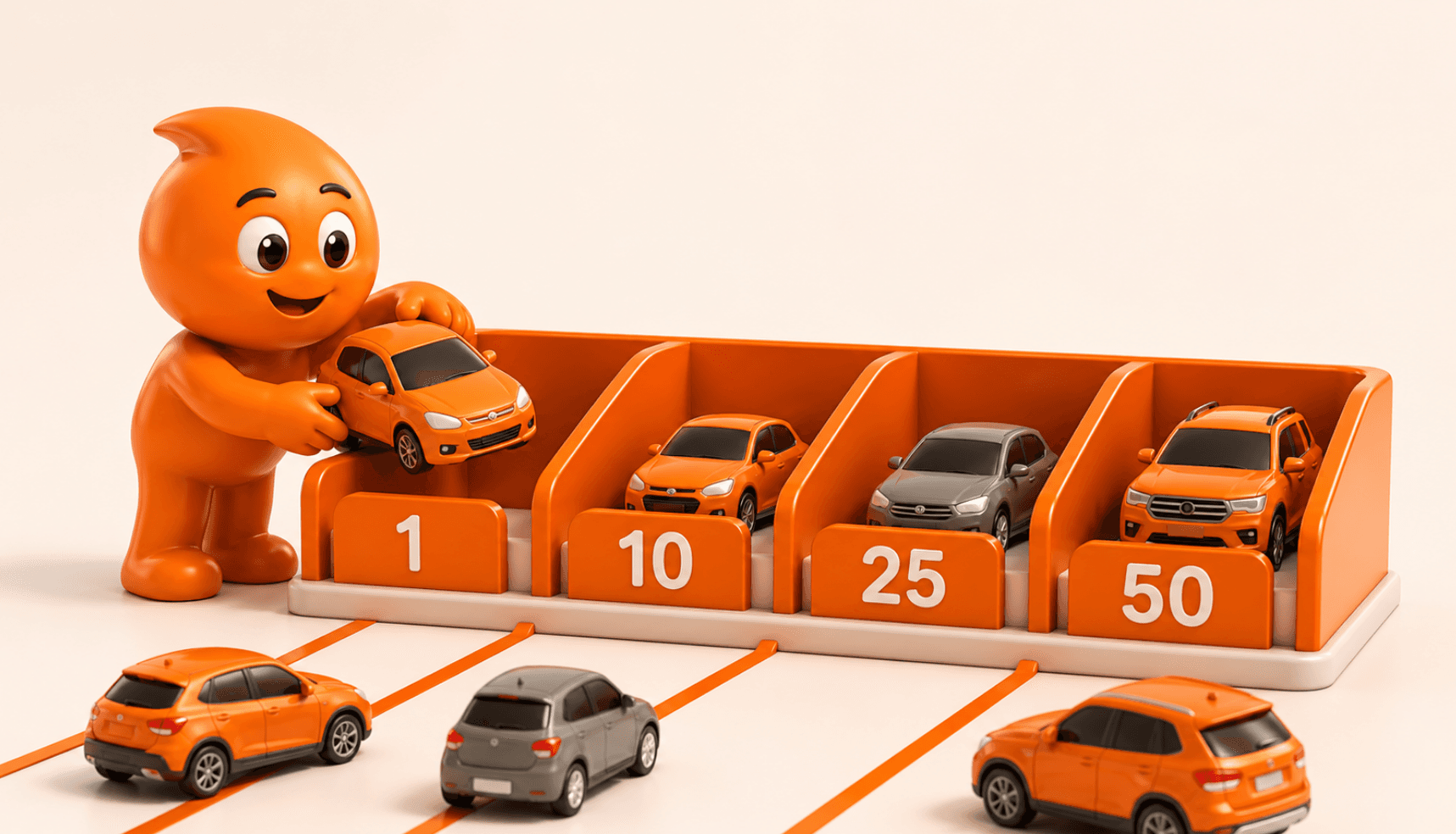
It usually comes down to things like:
- How much the car costs new. Newer, more valuable cars tend to land in higher groups because there's more for an insurer to pay out.
- Cost and availability of repairs. Expensive or rare cars cost more to fix, and slow parts supply pushes the group up further.
- How long repairs take. Longer repair times mean longer courtesy-car hire and bigger claims, which raises the rating.
- Speed and power. People claim more often on faster, more powerful cars, so high-performance models usually sit in higher groups.
- Safety and security features. More safety kit means fewer or smaller payouts, which can pull a car into a lower group.
The age of the car doesn't set the group directly, but there's a strong correlation: newer cars have more safety tech, yet they're often pricier to repair too.
How van insurance groups are decided
Vans work in much the same way, with two extras insurers weigh up: the weight of the van, and its built-in security. Insure a van for business and solid factory security can earn you a lower premium.
Cars by insurance group
As a quick guide, here's roughly what each band of the scale looks like. Use it as a starting point, then check the exact rating for the car you're interested in.
- Groups 1-10: the cheapest to insure. Small, economical city cars and runarounds.
- Groups 11-20: low cost. Popular family hatchbacks and superminis.
- Groups 21-35: mid-range. Larger family cars, estates and many SUVs.
- Groups 36-50: the priciest. Premium, performance and high-value vehicles.
Don't guess. Pop a reg into the insurance group checkerto see the precise group, alongside the car's MOT history and recorded mileage.
How your car's group affects the price
In theory, a car in a higher group costs more to insure than one in a lower group. In practice, that's not always how it plays out, because the group is only one of many things an insurer looks at.

They also weigh up your:
- Age
- Postcode
- Driving history
- Job title
On top of that, how people with a similar profile to you tend to drive (and claim on) a specific model shifts the price too.
A quick example
Say you're 25 and choosing between Car A (group 10) and Car B (group 20). You'd expect Car A to be cheaper. But if your insurer's data shows 25-year-olds claim far more often on Car A, Car B can end up cheaper to insure, even though it's in a higher group. It comes down to how people like you actually drive those cars.
Do insurance groups matter more for young drivers?
Yes. The insurance group is fixed to the car, but the premium you actually pay for that group depends heavily on your age. Drivers aged 17 to 24 are statistically far more likely to make a claim, so insurers charge them much more for the same group than they would a driver in their forties or fifties. This is exactly why younger and newly qualified drivers are usually steered towards cars in groups 1 to 10: a low-group car keeps the base risk down before the age loading is applied on top. An older, experienced driver with a clean no-claims record may find that even a group 20 or 30 car stays affordable. In practice, age and insurance group multiply together, the lower the group and the lower the risk your age profile carries, the cheaper the quote. If you are a young driver, choosing a car in a low insurance group is one of the most effective ways to cut your first premium.
Before you buy, check the exact group for any car you're considering with our insurance group checker, then compare a few low-group models to see which works out cheapest for your age and postcode.
Check before you buy
Insurance group is just one piece of the puzzle. Before you put money down on a used car, it pays to know its full story so there are no nasty surprises after you've insured it.
Full vehicle history
Run an HPI check to reveal outstanding finance, write-off records, stolen markers and import status in one report.
MOT and mileage
Confirm the car's record with our MOT history check and watch for clocking with the mileage check.
What it's really worth
Get a free car valuation so you don't overpay, and cross-check against any write-off history.
Check your insurance group in seconds
Enter your reg to find out what group your car's in, plus its full MOT and history data.